Asahi Shimbun
A bonito specialist’s journey into plant-based dashi.
The article explored why Hamaya began making dashi without bonito, and its focus on aroma and umami.
A new possibility, born from Hamaya’s knowledge of dashi.
Our philosophy, and the story behind it.
01.Our philosophy of dashi
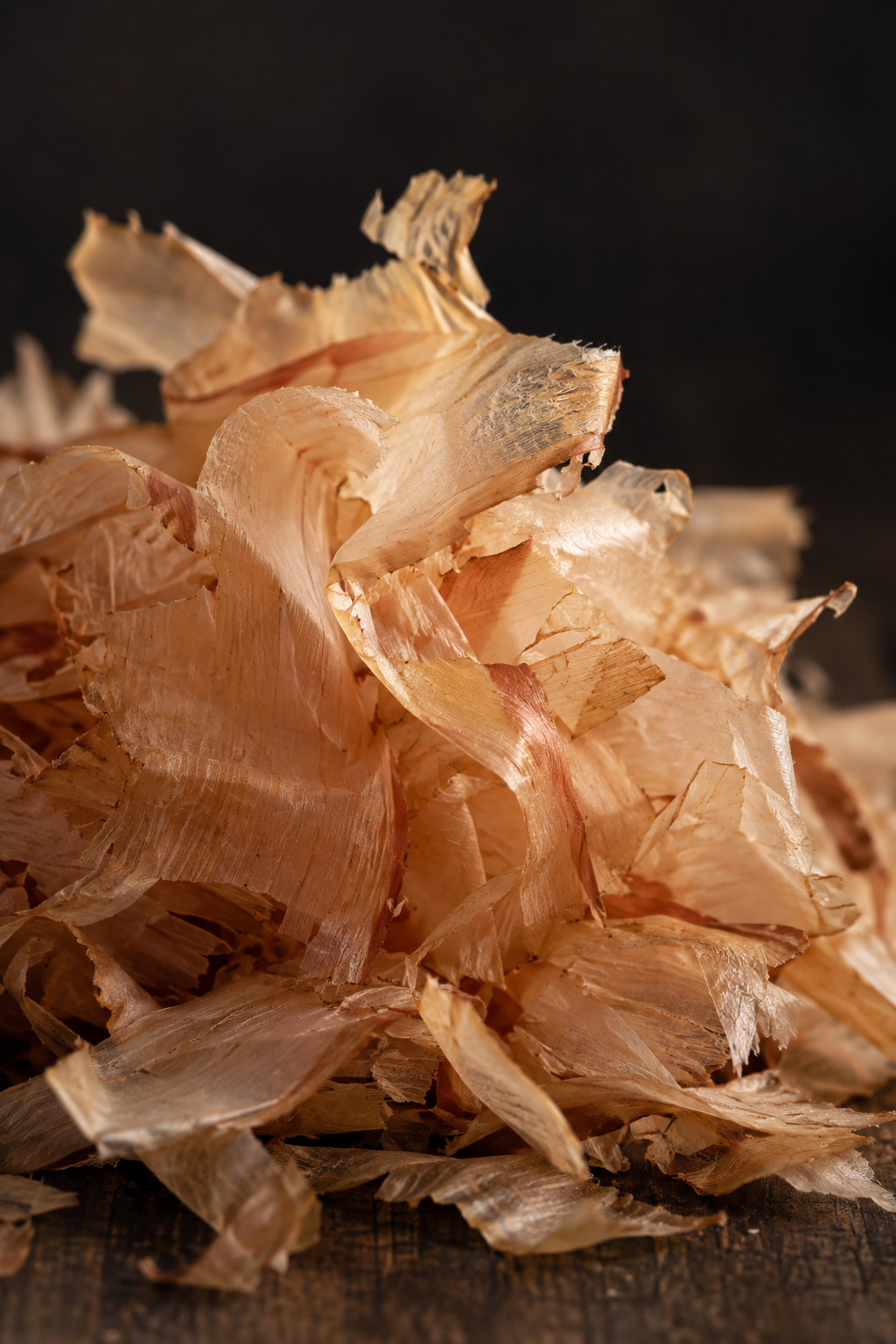
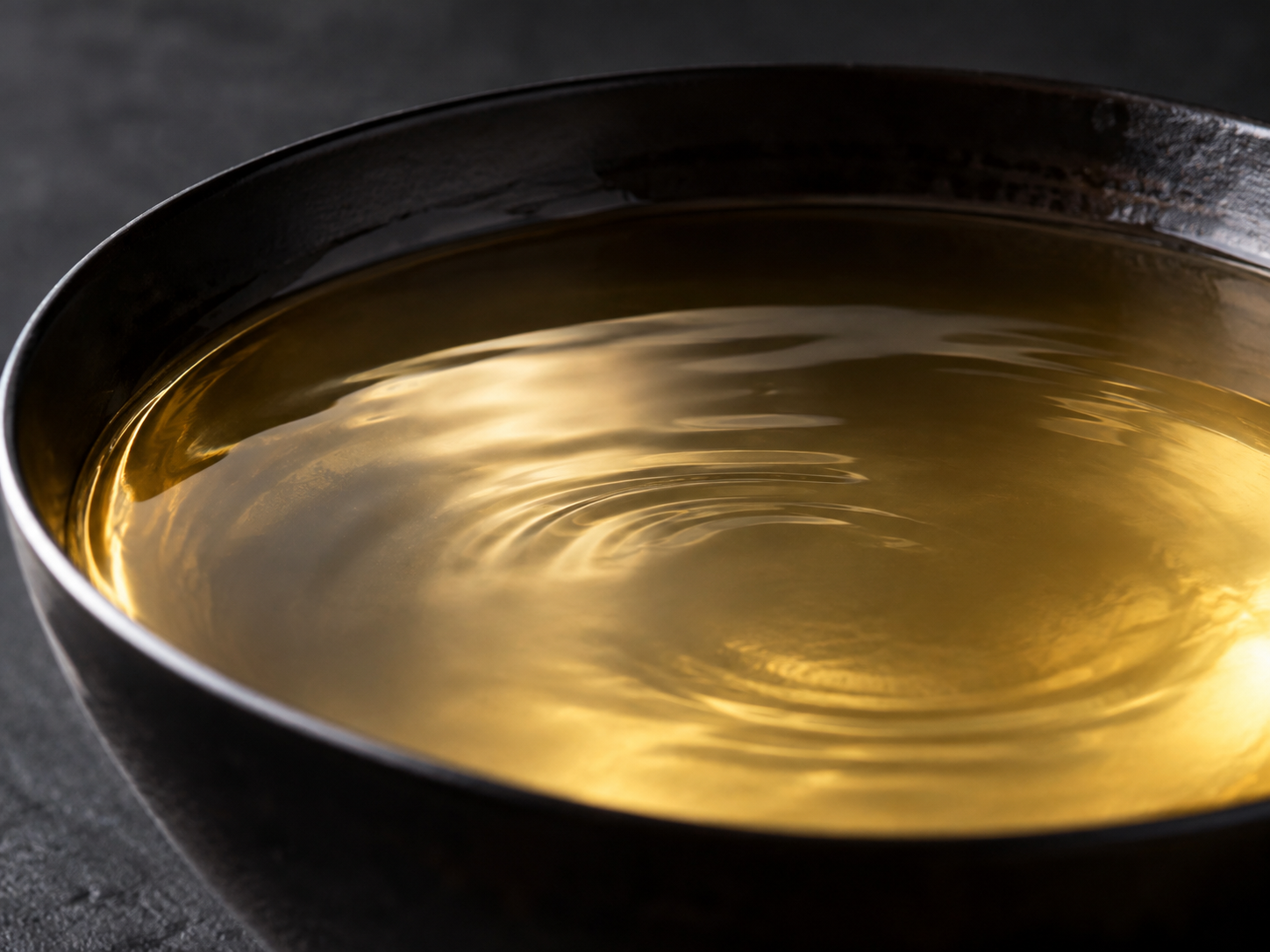
The aroma of dashi rises from a bowl. Even before the first taste, it brings a sense of anticipation. At Hamaya, that quiet power has always held our attention.
Our work began with bonito flakes in Tsuruhashi, Osaka, in 1947. From professional kitchens to family tables, we have built a knowledge of dashi: how to make it, and how to recognize what makes it good.
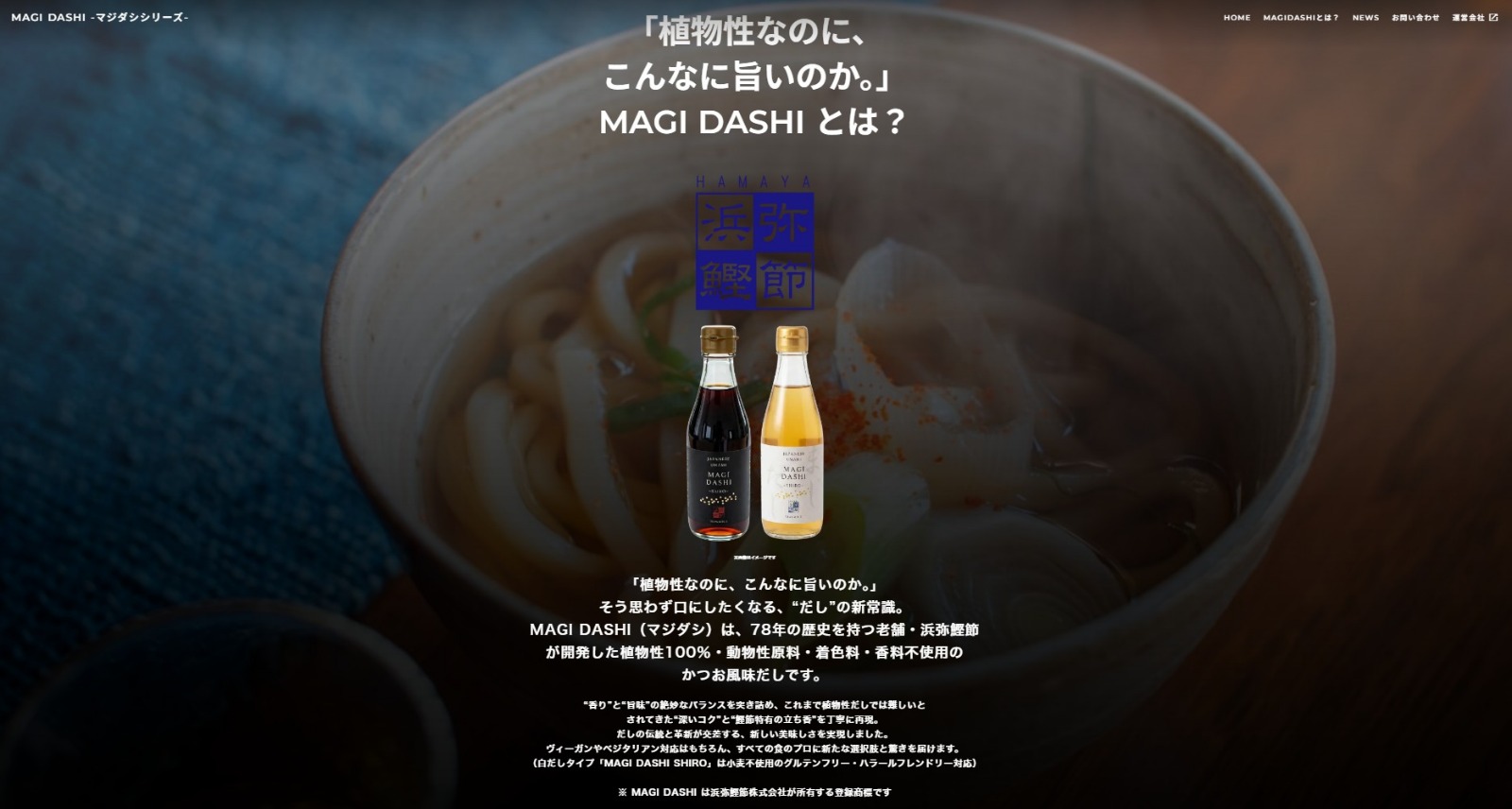
We brought that sensory knowledge into conversation with aroma research. As bonito specialists, could we make a satisfying dashi without bonito? MAGI DASHI is the plant-based drop that grew from that question.
Our commitment to flavor stays the same. What we want to expand is the number of tables it can reach.
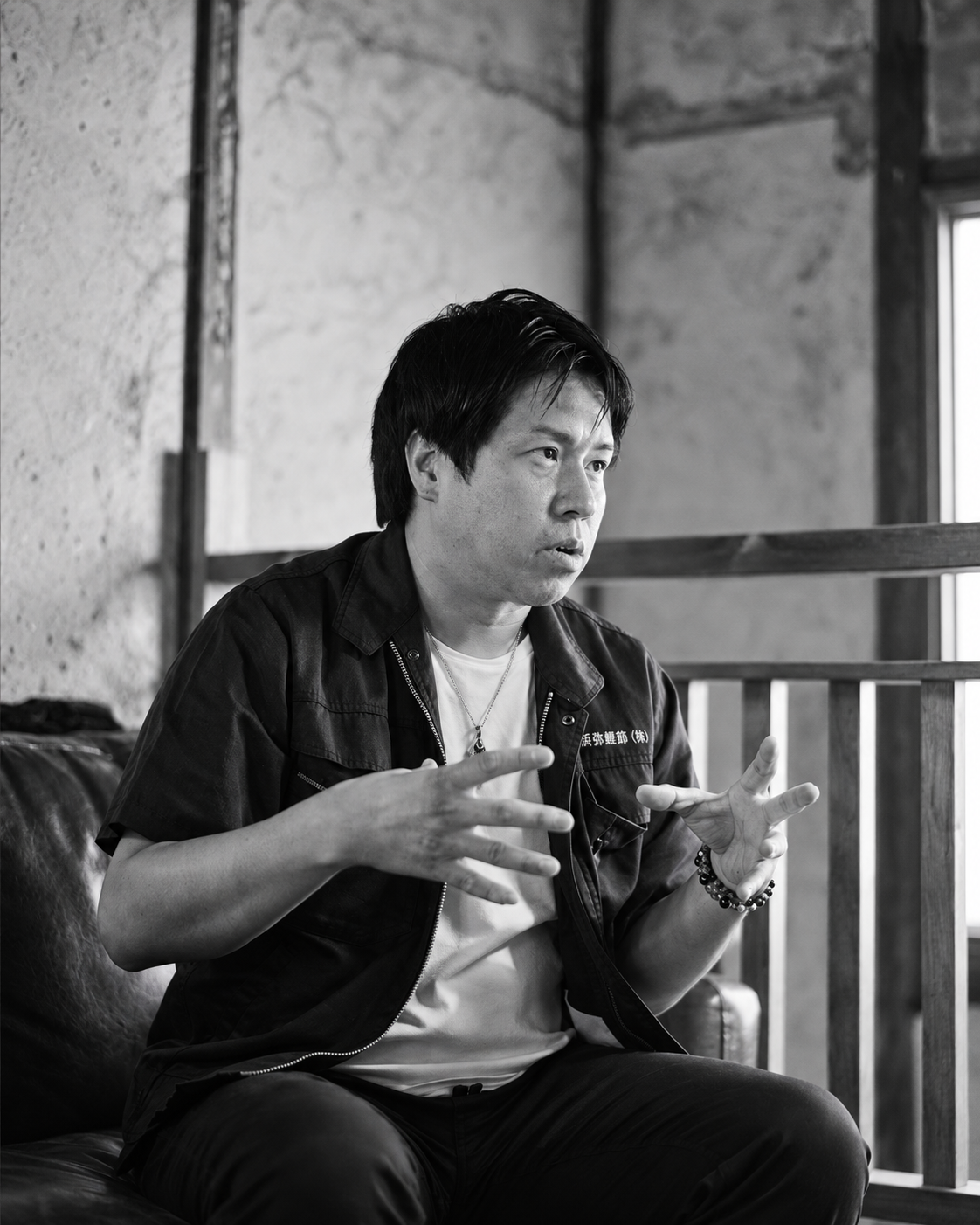
02.A message from Tadashi Kimura
People can sit at the same table and still have to eat different meals. Respecting individual beliefs and dietary needs matters deeply. Alongside that care, I want to create more moments when people can share a dish and say to one another: this is delicious.
Bonito dashi remains at the heart of our work. We want to build on that tradition by offering another choice: plant-based dashi. Everything we have learned about aroma and umami helps us shape that new possibility.
Our ambition is a dashi people choose for its flavor. In everyday cooking and plant-based menus alike, we want it to play a supporting role, bringing out the best in the ingredients.
For cooks, a shared dashi base offers a starting point for a wider menu. With care for each person’s dietary needs, we hope to create more opportunities to enjoy good food together and bring Japanese dashi to tables around the world. ONE TABLE is our wish for that future.
President, HamayaTadashi Kimura
ONE TABLE — More good food, shared.
03.The Hamaya story
From the founder to his daughter, and now to third-generation president Tadashi Kimura, carrying the family business forward has become a continuing exploration of dashi.

01 / ROOTS
Three generations. A shared commitment to dashi.
Hamaya’s founder established the business in Osaka. The name Hamaya brings together a character from Hamakatsu, where he trained, and one from his own name.
The founder’s daughter took up the work. Alongside the life of Tsuruhashi, Hamaya continued serving the kitchens that relied on its dashi.
A new factory opened in Higashinari, Osaka, as production expanded.
Under the name Katsuo Bushi, Tadashi Kimura began sharing food education and dashi-making. An online shop and the Shunderu dashi pack followed in 2009, bringing Hamaya’s work to home cooks as well as chefs.
02 / EXPLORATION
Knowledge coming together.
Tadashi Kimura developed new approaches to sales, digital operations and products, finding new ways to apply the family’s knowledge.
Joint research began with an Osaka University spin-off, bringing aroma research together with Hamaya’s sensory knowledge. An aroma-focused venture, Real Flavor, also became part of that exploration.
What makes bonito dashi taste the way it does? A hypothesis emerged: by understanding how aroma and depth work together, might it be possible to approach that flavor without bonito?
An encounter with Fuji Oil’s plant-based technology, MIRACORE, led to joint development. Combining that technology with Hamaya’s experience, the team explored a satisfying flavor from plant-based ingredients.
03 / A NEW DROP
A journey spanning approximately five years led to the launch of KURO — a versatile tsuyu with bonito-style flavor. A bonito specialist had created a new dashi option without animal-derived ingredients.
SHIRO, a shiro dashi with bonito-style flavor, joined the range. Exhibiting at ANUGA 2025 and Gulfood 2026 brought MAGI DASHI to conversations with kitchens in Japan and beyond.
A 100 ml format was introduced for trying MAGI DASHI and using it in smaller quantities, opening up more ways to bring dashi to the table.
As ocean conditions and the way we eat evolve, we want to carry dashi culture forward. We are bringing what we know about bonito to a new, plant-based expression of dashi.
Two products born from knowledge and research
04.In the media
Hamaya’s history, plant-based dashi development and the thinking behind ONE TABLE, seen through different media perspectives.
The article explored why Hamaya began making dashi without bonito, and its focus on aroma and umami.
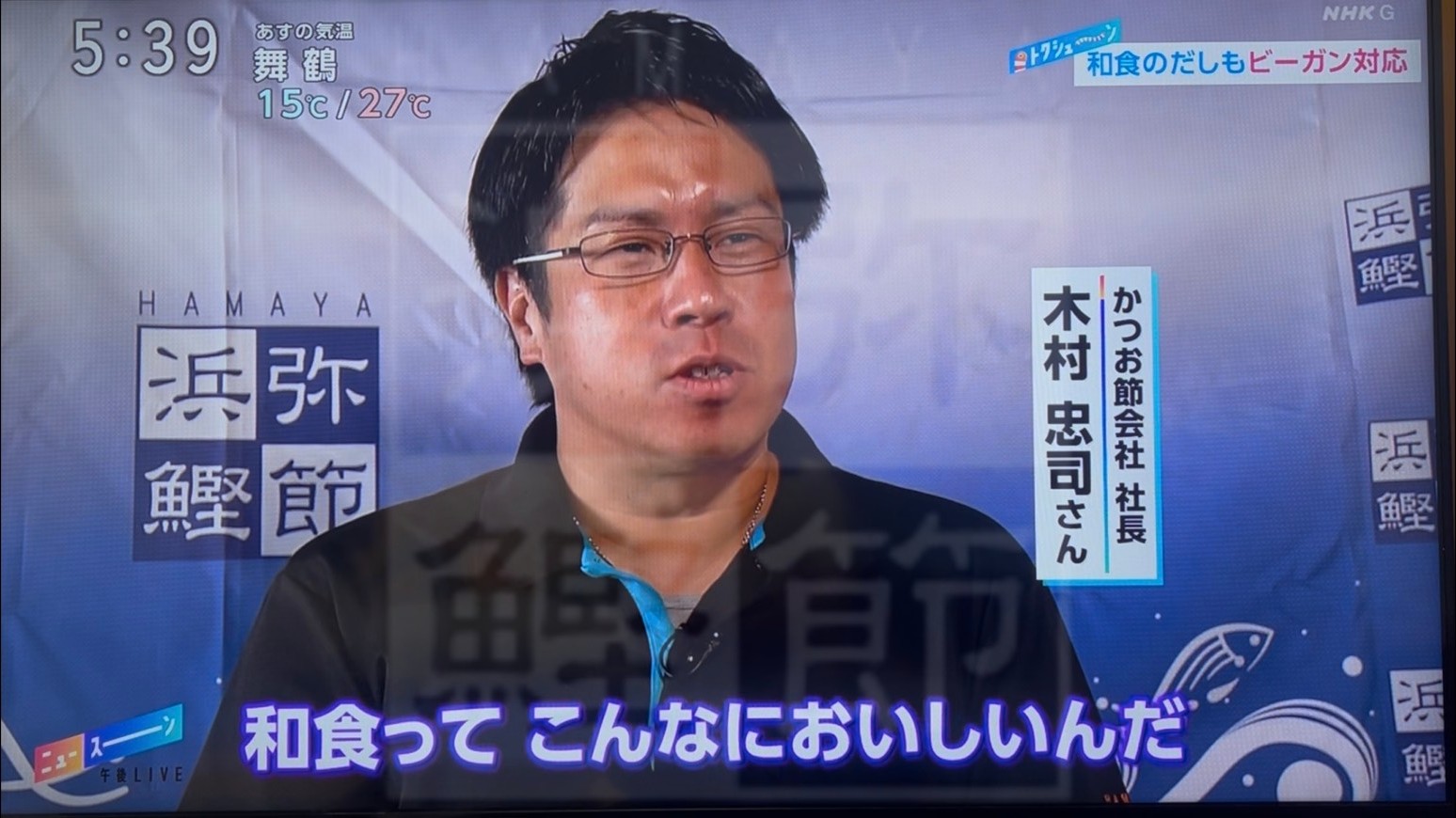
Changing dietary needs, and the search for satisfying flavor from plant-based ingredients.
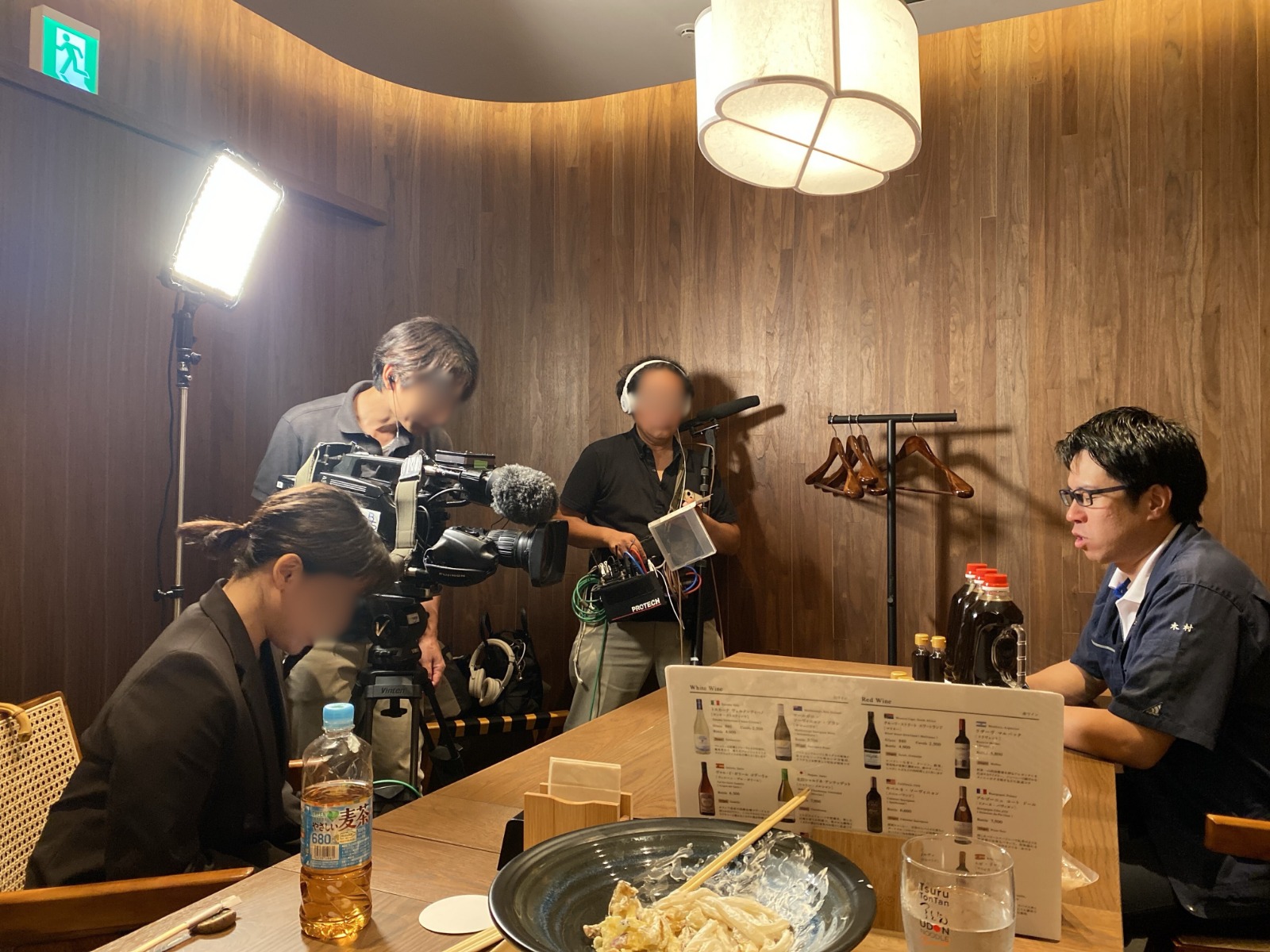
The product press conference, and a new direction for Japanese dashi culture around the world and across generations.
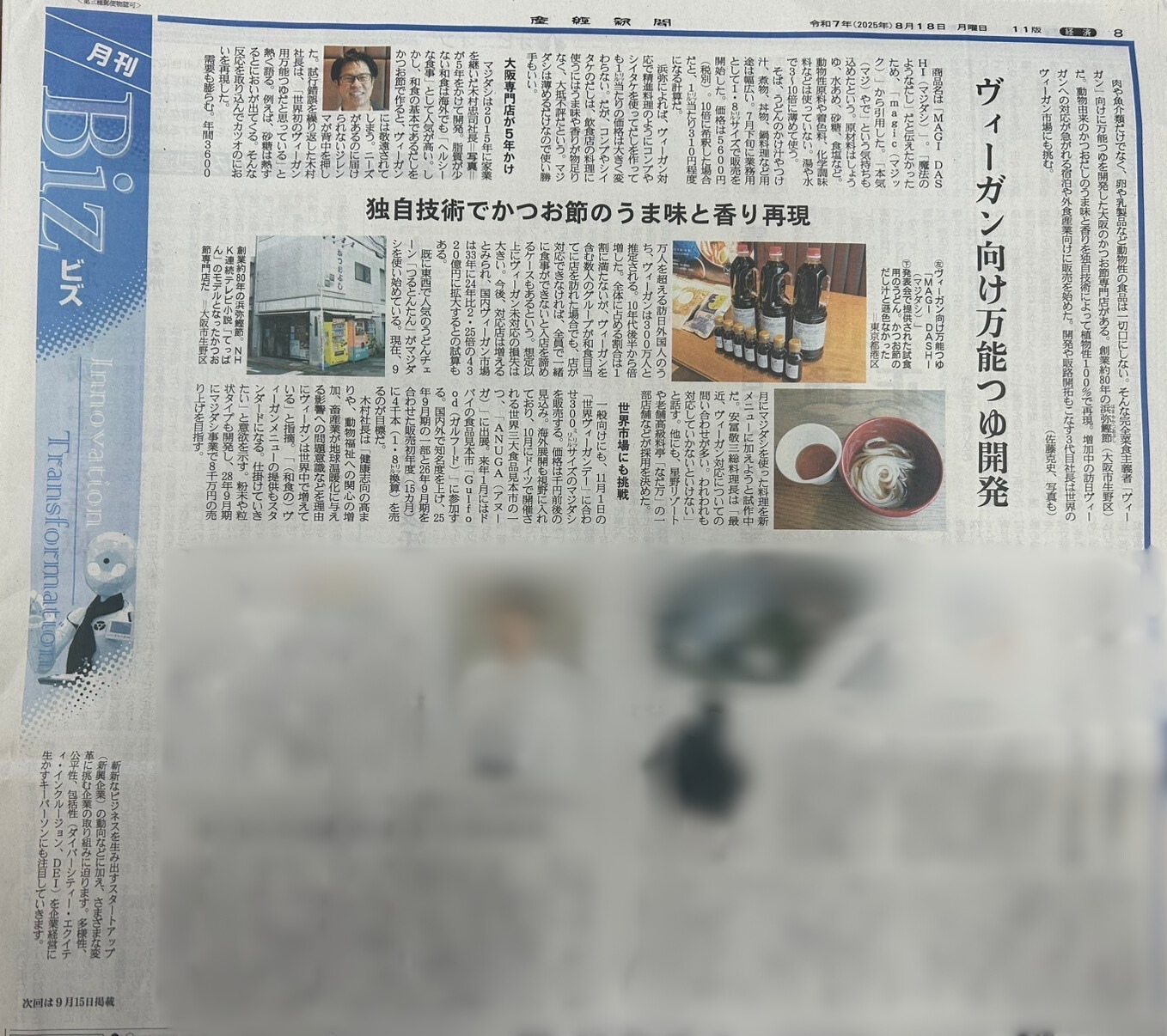
Why an established bonito specialist began developing plant-based dashi for kitchens in Japan and overseas.
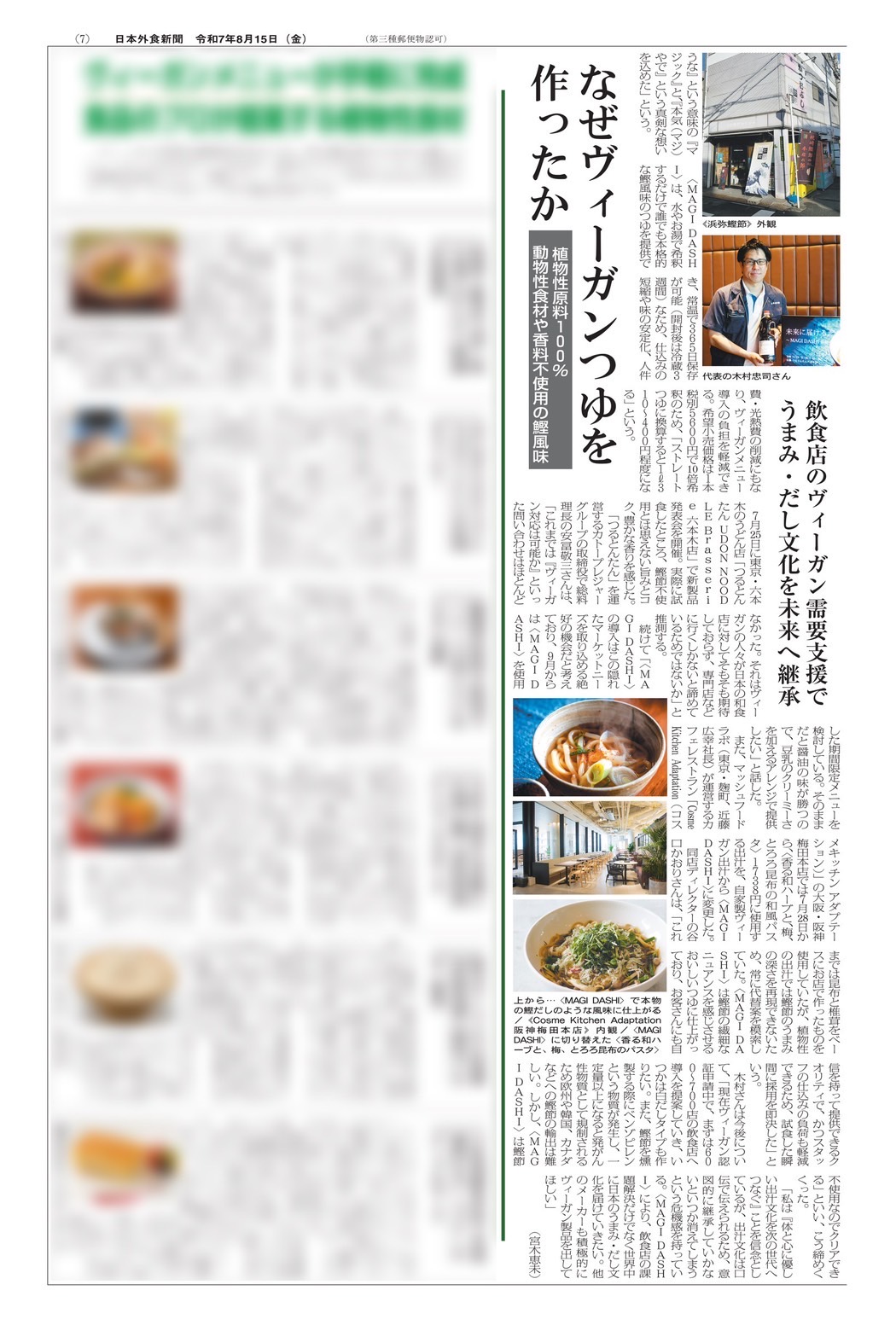
Carrying dashi culture forward through product development for the foodservice industry.
Sharing the appeal of bonito around the world, and the thinking behind MAGI DASHI.
Dates refer to publication of our news reports and may differ from the broadcast or newspaper date.
View all news05.Company Profile